
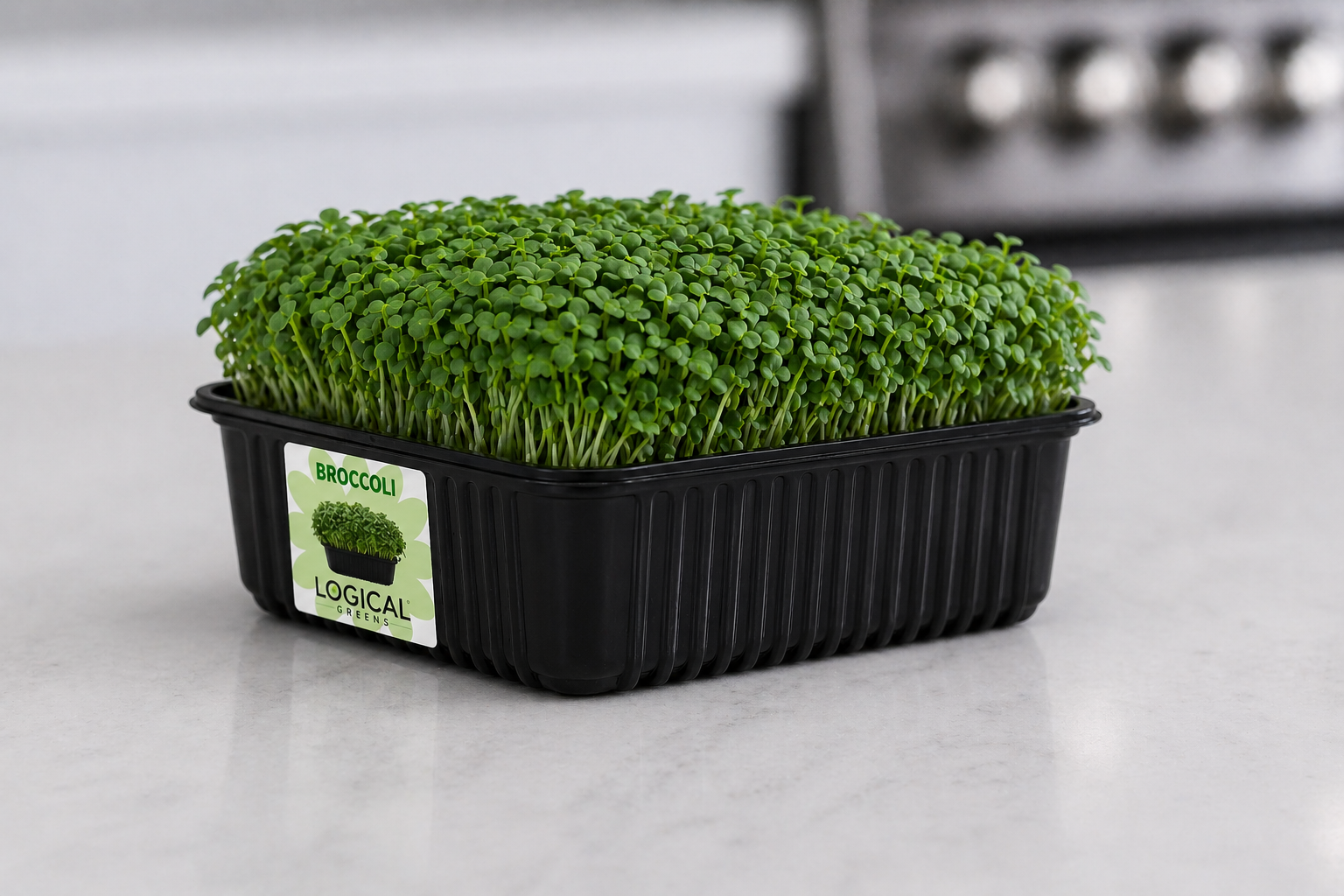
Broccoli was never anyone’s favourite vegetable growing up. Broccoli microgreens are a different story though – tender, mild, easy enough to toss into almost anything, and carrying a concentration of one specific compound that’s had nutrition researchers genuinely interested for decades now.
Sulforaphane’s the compound, and honestly, the research behind it is a big chunk of why broccoli microgreens keep landing on “worth growing at home” lists. Here’s what the research actually says and what it doesn’t.
Johns Hopkins, back in 1997, discovered that the broccoli microgreens have about 100 times more glucoraphanine. This is a compound that becomes sulforaphane in normal broccoli. Recently, a study was conducted to track sulforaphane levels in people, where the compound was far higher than the one who ate the mature one.
Sulforaphane sits in a group of plant compounds called isothiocyanates, and it’s mostly known for switching on the body’s phase 2 detoxification enzymes – the internal machinery responsible for clearing out toxins and carcinogens.
That specific finding, the enzyme activation part, is one of the more solid pieces of research here, backed by a decent body of both lab and human studies.
Past that, its antioxidant and anti-inflammatory properties have been looked at across a lot of different angles, though a good chunk of that research is still fairly early-stage, especially on the human clinical side.
This is where the evidence is most solid, with several studies confirming sulforaphane’s role in switching on those enzymes.
It has poked at sulforaphane’s potential role in cutting down LDL oxidation and arterial inflammation, both tied to cardiovascular risk, though this evidence sits earlier-stage compared to the detoxification findings
This is genuinely active, taken seriously across the scientific community, and the mechanisms behind it, including effects on cancer cell growth observed in lab settings, are reasonably well mapped out.
Neuroprotective research is the least developed of the bunch of broccoli microgreens. Some findings hint that sulforaphane might cross the blood-brain barrier and activate protective pathways in neural tissue, but that’s mostly animal studies right now, with human trials still working their way through.
Sulforaphane gets the spotlight, sure, but broccoli microgreens carry a wider nutrient spread too – vitamins, minerals, other antioxidant compounds, all concentrated for the same reason sulforaphane is: the plant gets harvested so early in its life. Comparisons across different microgreen types have found consistently higher nutrient density than their full-grown versions, broccoli included.
A few things that actually make a difference here:
Broccoli microgreens aren’t a cure for anything, and a fair amount of the more exciting research is still working its way through human trials. But the core finding holds up well.
These tiny plants carry a genuinely higher concentration of sulforaphane and other beneficial compounds than mature broccoli does, and that part’s well established. At Logical Greens, eating them fresh, raw, or barely cooked, regularly, is a reasonable way to fold real nutritional value into an otherwise ordinary diet.
Q1. Are broccoli microgreens really more nutritious than mature broccoli?
Yeah, for sulforaphane. Studies show broccoli microgreens and sprouts have a lot more glucoraphanin, the compound that becomes sulforaphane, than full-grown broccoli does, plus generally higher levels of other nutrients too.
Q2. Do broccoli microgreens actually help prevent cancer?
People are really looking into how sulforaphane might help prevent cancer. Scientists have studied how sulforaphane works quite a bit. This research is mostly about stopping cancer before it starts rather than curing it.
Q3. What is the best way to eat broccoli microgreens – raw or cooked?
The natural taste of microgreens is what makes microgreens healthier than other vegetables. If you cook microgreens, you will lose the sulforaphane inside the microgreens. It is much better to cut your microgreens and eat them while the microgreens are still fresh.
Q4. How much broccoli microgreens should I eat to get a real benefit?
These types of food are the ones that, if they won’t work on your body, they won’t do anything bad to your body either. The reason why microgreens are a better option than a mature plant the sulforaphane is more concentrated in them.