
Growing microgreens at home gets pitched online as this effortless, foolproof hobby — snap a photo of a lush tray on day seven, harvest, repeat forever. The reality sits somewhere more honest than that. It’s a genuinely rewarding thing to get into, but it comes with real trade-offs that most of the glowing “start today” content conveniently skips over.
Here’s an actually balanced look at what this hobby gets you, and what it costs, in time, money, and the occasional failed tray, before you decide whether it’s worth setting up.
Search this topic, and you’ll mostly find two kinds of content: seed-seller listicles that are all upside (“10 reasons to start today!”), or step-by-step growth guides that tell you how without ever addressing whether you should. Neither actually helps you decide if this fits your routine, your kitchen, or your patience.
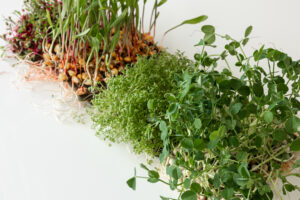
Here’s a version that actually shows the pros and cons of growing microgreens at home.
| The Case For | The Real Cost | |
| Freshness | Eaten at peak, days ahead of anything store-bought — nutrients like vitamin C degrade fast post-harvest | None — this one’s a clean win |
| Cost | Cheaper per gram than retail, if grown regularly | Real upfront cost (seed, trays, medium, possibly light); casual growing may not break even |
| Control | Full visibility into seed source, medium, water — matters if avoiding synthetic treatments | None, beyond the setup cost above |
| Satisfaction | Seed to harvest in under two weeks — genuinely rewarding | Comes with a real learning curve first |
| Time | Each check is a minute or two | But it’s daily, for the full 1–2 week cycle, with no pausing for a busy week |
| Mess | – | Soil goes everywhere at setup/harvest; mould and fruit flies are a real risk, not an edge case |
| Yield | – | Modest per tray — garnish and cooking-portion territory, not a grocery replacement |
Microgreens start losing flavour and nutrient density within days of being cut. Growing at home means eating something at its actual peak, not several days into decline by the time it reaches a shelf — and nutritionally, that gap is bigger than most people assume.
A single packet of seed — sunflower or pea especially — produces multiple grow cycles for a fraction of what the equivalent pre-grown volume costs at retail. That math doesn’t hold immediately, since there’s real setup cost first, but it does pay off for anyone growing on a regular rotation rather than as a one-off experiment.
Choosing your own seed source, growing medium, and water quality means knowing exactly what did and didn’t touch your food — which matters specifically to anyone trying to avoid synthetic treatments or unclear sourcing, not just as a vague “healthier” claim.
Watching something go from seed to harvest in under two weeks, and actually eating the result, scratches an itch a lot of other home hobbies don’t — especially for anyone without the space or time for a full garden.
Overwatering, airflow, and not enough light are the most common early mistakes. It usually takes a not-very-good batch before you understand what your specific setup really needs.
Quality seed, trays, growing medium, and often supplemental lighting if natural light is limited — all of it costs money upfront and needs periodic replacement. Someone growing casually, a tray every few weeks rather than on a real rotation, may not actually save much once time and materials are counted honestly.
Growing microgreens at home requires care. Watering, looking for mold, watching how they grow. Throughout the entire one-to-two week period. Every check only takes a minute or two. It’s something that never stops, even when life gets busy. It’s different from a hobby that can take a break during a hectic week.
Soil or growing medium gets everywhere during setup and harvest. Mould, damping-off, and the occasional fruit fly are a real possibility, especially in a humid climate or an over-watered tray — not a rare edge case.
A standard tray produces enough for regular garnishing and cooking use, not the volume that replaces a grocery store’s worth of leafy greens. Anyone picturing self-sufficiency from a single windowsill tray will likely be disappointed by the actual quantity.
This fits someone who enjoys the process itself, not the final result, and who is realistic about the daily time and occasional mess that can happen. It is a fit for anyone who wants a completely hands‑off source of fresh greens or who expects dramatic savings from growing only occasionally.
For anyone who tries it and finds the daily upkeep really does not fit them but still wants the freshness and quality of buying from a supplier who actually tracks cut‑to‑delivery timing.
Logical Greens, among them, give you most of the benefit without the daily upkeep. That is not a consolation prize; it simply shows which trade‑off really fits your routine, offering the freshness and quality without the daily upkeep.
Growing microgreens at home is genuinely worth it for the right person — real control over your food, a satisfying hobby, meaningful savings over time. It’s not the always-worth-it thing most content makes it look like. The mess, the learning curve, and the time needed every day are costs that should be thought about before starting, not found out by accident after three trays.
Q1. Is growing microgreens at home actually cheaper than buying them?
Often yes over time. With regular growing. But the upfront cost of seed, trays, and medium means it is not necessarily cheaper for casual or infrequent growers once time is factored in.
Q2. How long does it take to get good at growing microgreens at home?
Most people see real improvement after three or four grow cycles. Early mistakes with watering and light are common and take some trial and error to correct.
Q3. Is growing microgreens at home messy?
Somewhat, yes. Soil or growing medium gets everywhere during setup and harvest, and mould or fruit flies are a genuine possibility, particularly in humid conditions or with overwatering.
Q4. How much can you actually harvest from one tray?
A modest but meaningful amount — enough for regular garnishing and cooking use, not close to replacing a full grocery supply of leafy greens from a single tray.